AI Rap Duo vs. Hotel Lobby AI vs. Migos AI: What’s the Difference?
AI Rap Duo, Hotel Lobby AI, Migos AI, and the Hotel Lobby trend often describe the same viral two-person video format—but not at the same level. Here is how to use each name accurately.
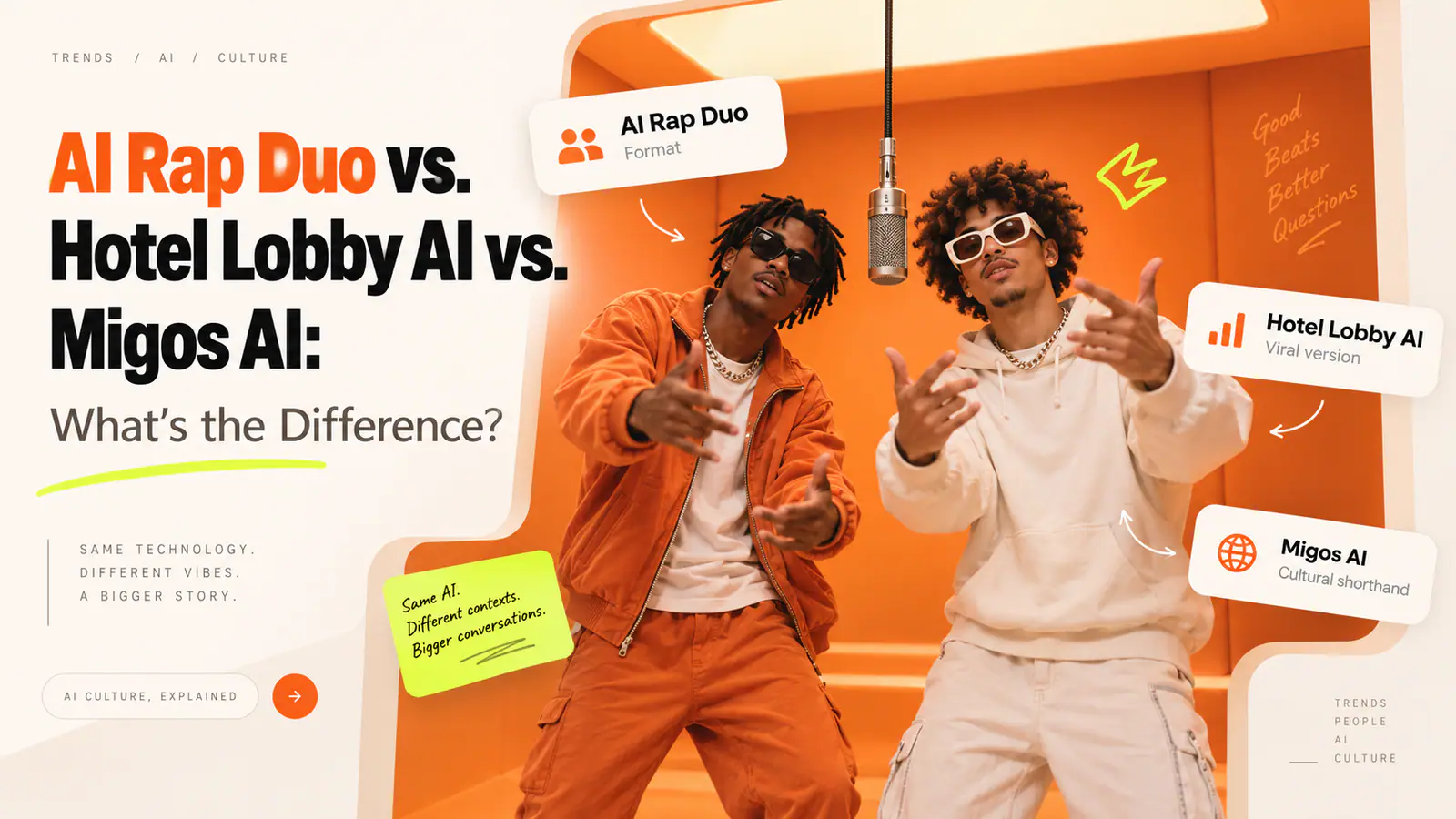
A search for AI Rap Duo, Hotel Lobby AI, or Migos AI can make it look as if there are three different effects, apps, or songs to understand. Usually, there are not.
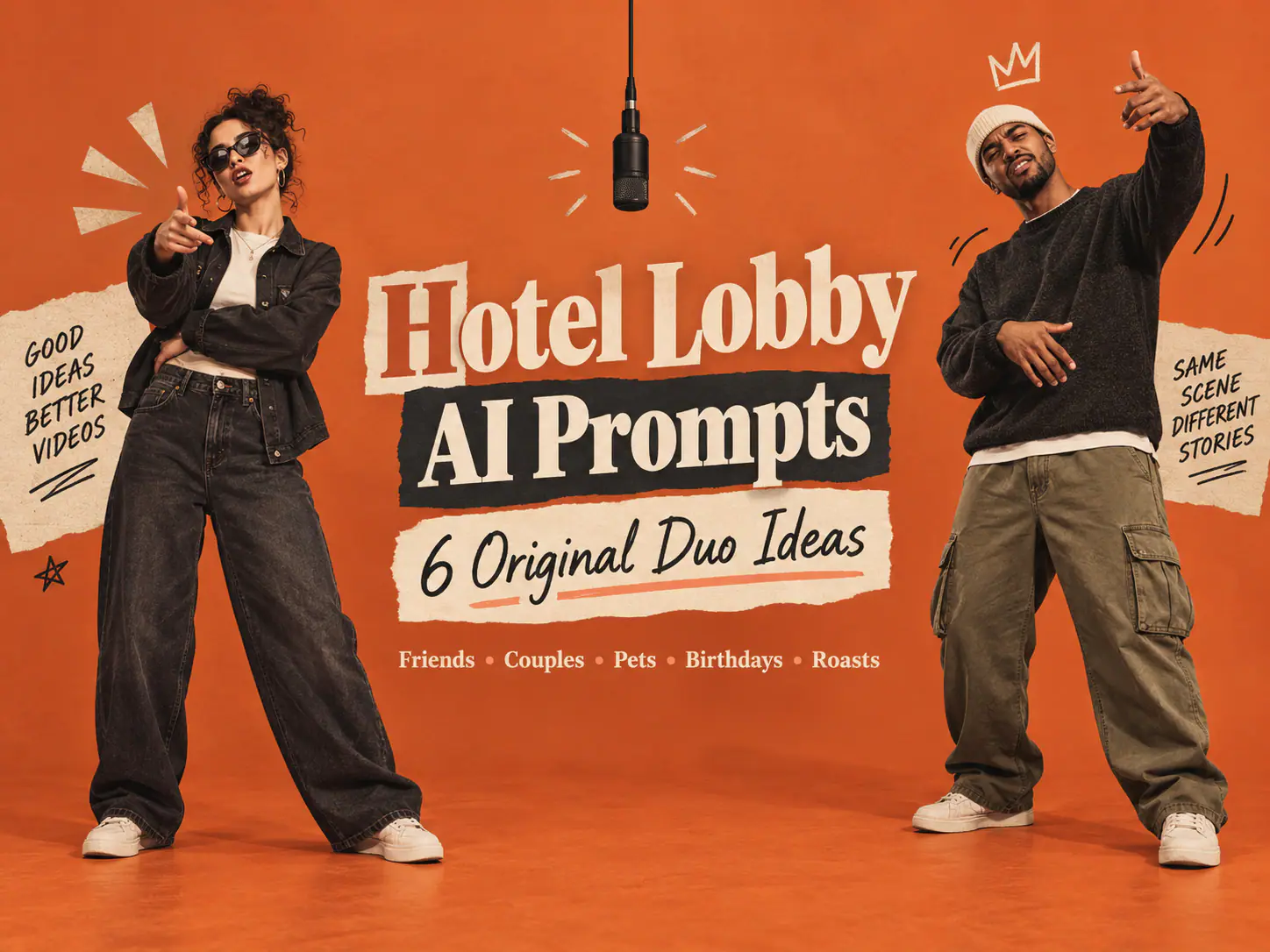
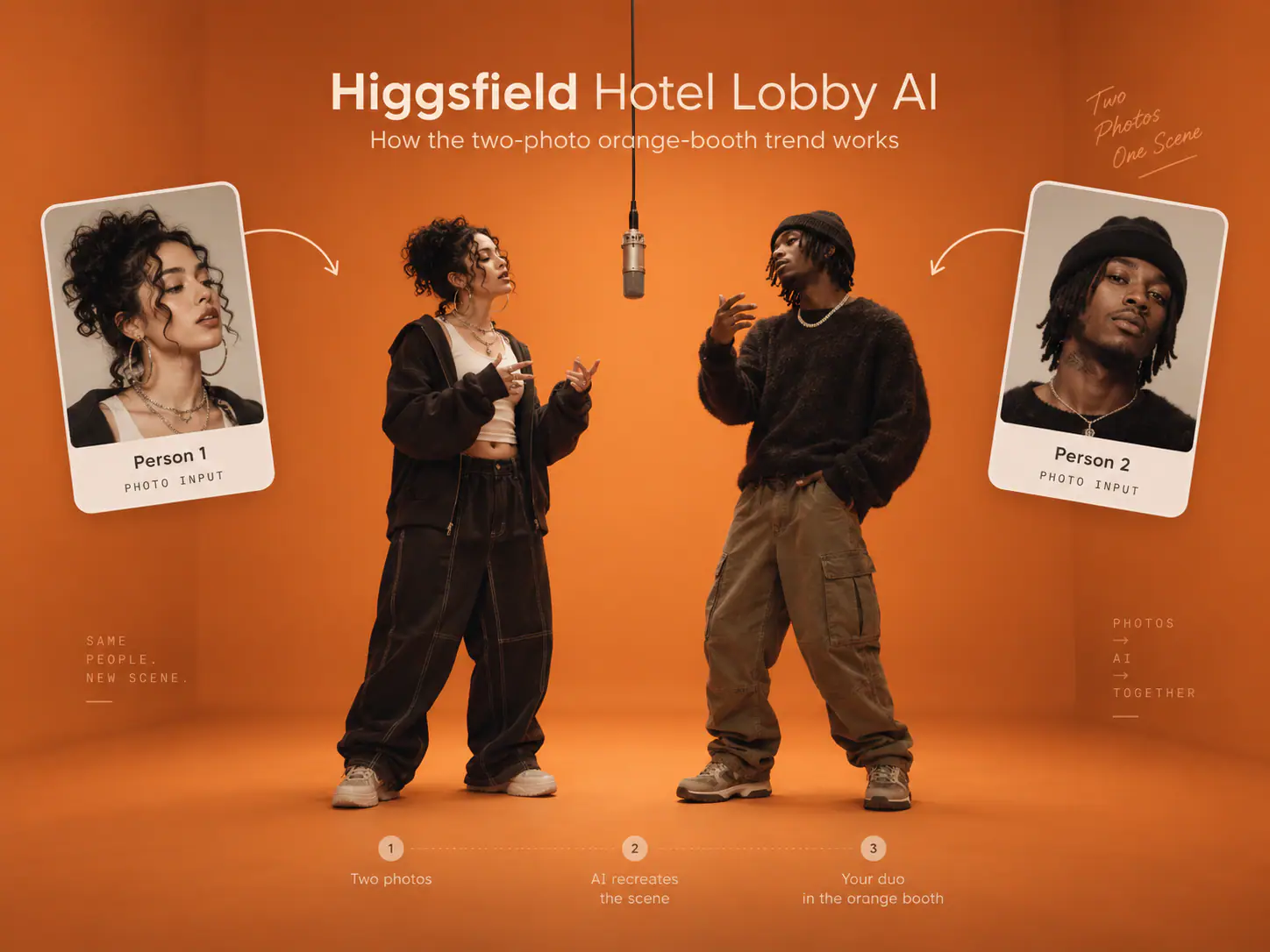
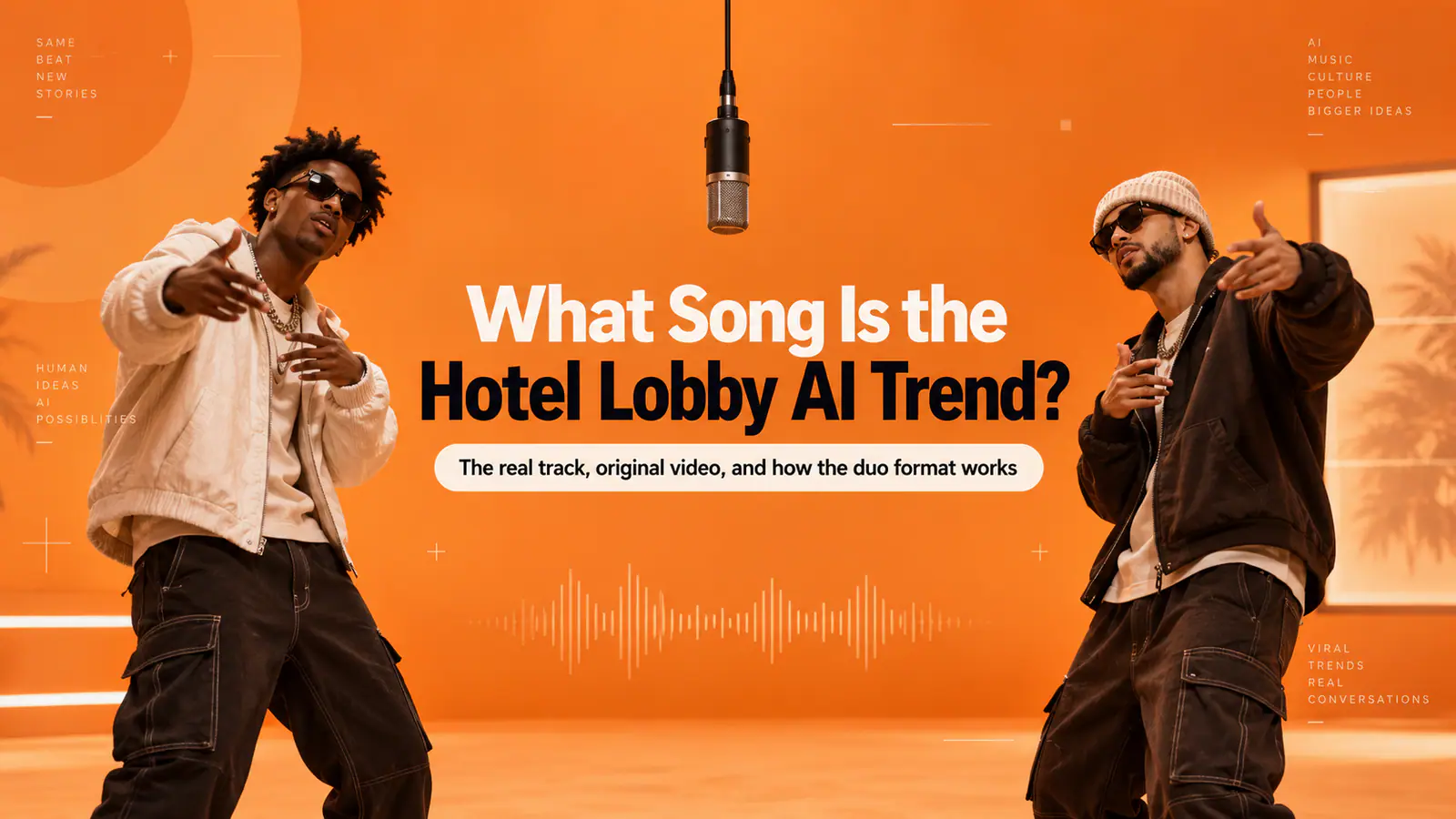
They are overlapping names for a fast-moving social format: two people—or two characters, pets, or deliberately odd pairings—appear in a shared rap-performance video, typically on a saturated orange set with one hanging microphone and an alternating, back-and-forth delivery.
The useful distinction is not which name is “correct.” It is what each name tells you about the searcher’s intent. “AI Rap Duo” describes the format. “Hotel Lobby AI” identifies the recognizable viral version. “Migos AI” signals the cultural reference people use to find it. “Hotel Lobby trend” is the social shorthand that travels furthest in captions and comments.
Quick answer: the naming map
| Name | What it usually means | Best use | What it does not guarantee |
|---|---|---|---|
| AI Rap Duo | The broad, two-person AI rap-performance format | Explaining the category or looking for a reusable duo-video workflow | A specific song, set, artist, or template |
| Hotel Lobby AI | The current viral variation associated with an orange performance booth, one hanging mic, and two subjects trading energy | Finding the recognizable visual format people are posting | A literal hotel lobby or a single official app |
| Migos AI | A community shorthand formed around Quavo, Takeoff, and the wider Migos association | Searching by the cultural reference that introduced many people to the trend | Official Migos involvement, artist voice cloning, or a use of the original track |
| Hotel Lobby trend | The social-media name used for the meme, sound, and remix culture around the format | Discovering examples, tutorials, and platform conversation | A precise technical description of how every tool creates the result |
The plain-English version: AI Rap Duo is the umbrella. Hotel Lobby AI is the orange-booth viral template most people recognize. Migos AI is the cultural nickname. Hotel Lobby trend is the social label.
That distinction matters because a person searching “migos ai meaning” is often asking for context, while someone searching “AI rap duo” is usually asking how to make a two-person video. A good page should answer both without pretending they are different technologies.
Why the four names converged
The visual language is unusually easy to identify: one central microphone, a flat orange field, two performers, and a clear call-and-response rhythm. Once creators began swapping in friends, pets, fictional characters, and unexpected duos, the scene stopped functioning only as a music-performance reference and became a reusable meme structure.
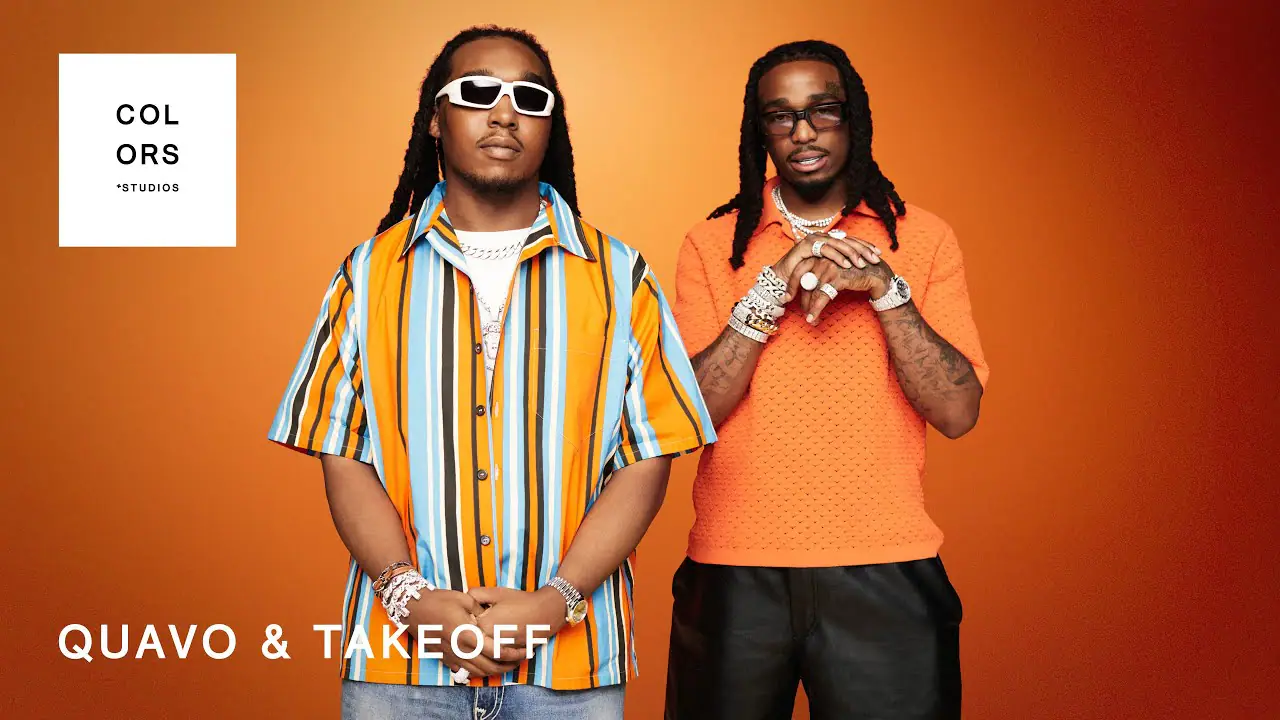
The cultural source is Quavo and Takeoff’s 2022 A COLORS SHOW performance of “Hotel Lobby,” released under the Unc & Phew name. The orange backdrop and shared mic gave the clip a visual identity that is much easier to recognize than to describe. Recent reporting on the meme’s return notes that the AI versions spread by mapping new pairs of faces onto that back-and-forth performance logic—not because “Migos AI” is a formal software category.
Watch the original two-person orange-studio performance on YouTube
The format’s success is not just about the song. It has a practical visual recipe:
- Two distinct subjects give the video a built-in relationship and a turn-taking pattern.
- A fixed, minimal stage makes the output readable in the first second of a vertical feed.
- A centered microphone instantly explains that this is a performance, not a random face swap.
- Alternating gestures and lip movement make even a short clip feel like a duet rather than a static portrait animation.
- Unexpected casting—siblings, coworkers, a pet and its owner, or fictional rivals—creates the joke people want to share.
Those ingredients are why “AI Rap Duo” is the most durable term. A trend can change its song, color, or reference clip and still remain a two-person AI rap-performance format.
1. AI Rap Duo: the generic format name
AI Rap Duo is the most accurate label when the point is the output, not a specific reference. It means a generated video that places two independently supplied subjects into one music-performance scene with complementary roles.
That generic definition is important. Two people do not need to have been photographed together, and a duo need not involve professional musicians. In practice, the format is especially useful for friends in different cities, birthday messages, inside jokes, couples, siblings, or intentionally mismatched pairings.
An AI Rap Duo workflow should make the two roles legible. Look for separate portrait slots, an obvious left/right assignment, and a way to preview crops before generating. If the tool only accepts one group photo, it may produce a two-person-looking scene, but it offers less control over identity separation and performer placement.
For a purpose-built version of this broader format, AI Rap Duo lets you upload one portrait for the left role and one for the right, then generates a short vertical performance without asking you to write a scene prompt or custom lyrics. That is the right product framing when a reader’s real goal is “put these two people in a shareable rap moment,” rather than “recreate a particular copyrighted performance.”
2. Hotel Lobby AI: the recognizable viral variation
Hotel Lobby AI is narrower. It describes the orange-booth variation that viewers recognize from the original two-person performance and from the social posts that followed it. The phrase is a naming shortcut for a visual arrangement, a duo rhythm, and a meme context—not a claim that the generated action happens in an actual hotel lobby.
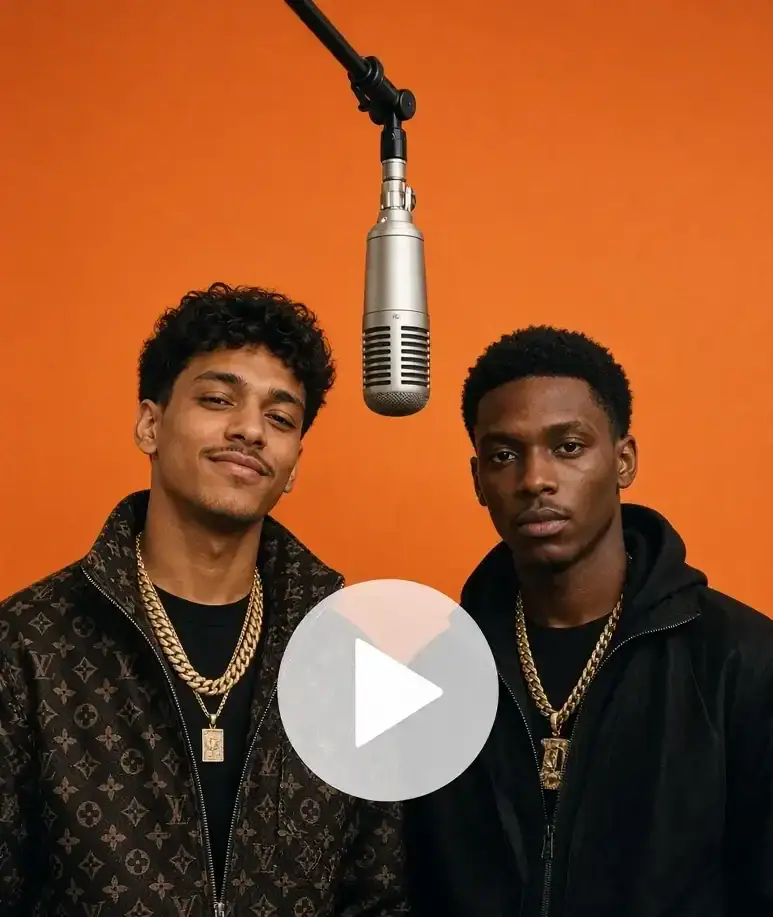
The label helps because it tells a tool or tutorial audience what to expect visually: vertical framing, an orange or warm-toned studio look, a shared microphone, and a handoff between two performers. It is less helpful as a technical description. Different products can use different models, reference motion, audio approaches, and safety rules while producing something that viewers would still call “Hotel Lobby AI.”
If this is the phrase a reader started with, the Hotel Lobby AI workflow is designed around two separate portraits, one position per person, and a preset performance. The photos can come from different days or places; the important preparation step is choosing clear, well-lit images with one unobstructed face in each frame.
3. Migos AI: the cultural nickname, not a technical specification
Migos AI is the least precise and the most culturally loaded name. People use it because the viral reference involves Quavo and Takeoff, whose history with Migos makes the label feel natural in comments and search queries. But the specific orange performance was by Quavo and Takeoff as Unc & Phew, not a formal “Migos AI” product or an official category created by the group.
That difference is more than trivia. The phrase “Migos AI” can also be misunderstood as a request for artist voices, an AI cover, or a video that exactly reproduces the original recording. It should not be treated as a promise of any of those things.
In the current trend vocabulary, “Migos AI” is best read as: “the two-person, orange-studio rap video I saw associated with Quavo and Takeoff.” It is a discovery term, not a technical requirement.
For readers who search with that cultural shorthand, the Migos AI page makes the distinction explicit: it is a two-portrait preset that requests new AI-generated lyrics, vocals, and a beat. It does not offer artist voice selection, voice cloning, or a promise to reproduce the original song. That makes it a more responsible interpretation of the trend than treating a rapper’s identity or recording as a one-click feature.
4. Hotel Lobby trend: the social-discovery name
Hotel Lobby trend is the broad social label. It is what a creator might use in a TikTok caption, what a viewer might type after seeing an orange-booth clip, and what a tutorial might use to gather several versions under one umbrella.
The trend name is useful for discovery because it accommodates the many ways people remix the format: friends, celebrity parodies, pets, babies, fictional characters, or a single person occupying one side of the stage. It is not useful for deciding whether two tools are technically identical.
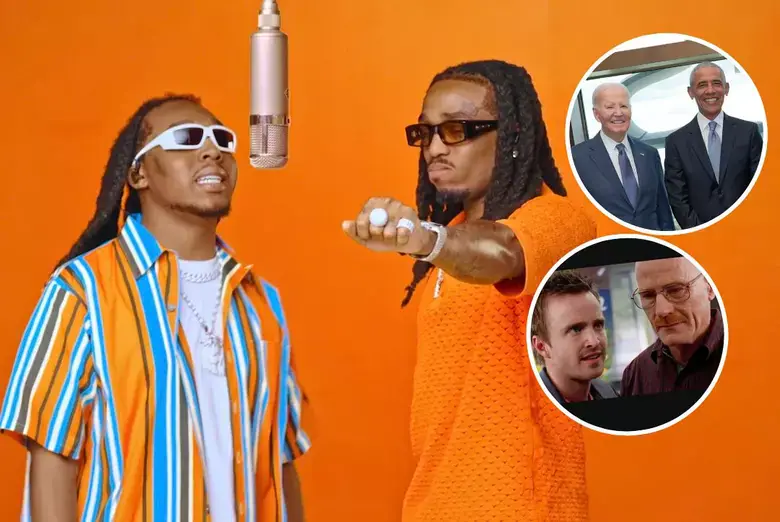
In other words, the trend is the conversation; the AI Rap Duo is the format; Hotel Lobby AI is the most recognizable execution; and Migos AI is a searcher’s cultural pointer back to the reference.
Are these actually different tools?
Not necessarily. Different products may market nearly the same sort of output under different names because each phrase captures a different way people arrive at the page.
| If the viewer says… | They probably mean… | The clearest response |
|---|---|---|
| “I want an AI rap duo with my friend.” | A general two-person generated performance | Explain the two-portrait format and role assignment |
| “How do I make the orange booth video?” | The Hotel Lobby visual variation | Explain the orange set, central mic, and alternating duo choreography |
| “What is Migos AI?” | The reference behind the trend | Explain the Quavo/Takeoff association and avoid implying official artist participation |
| “How do I do the Hotel Lobby trend?” | A shareable social version | Explain portrait quality, consent, review, and platform-ready vertical output |
A tool can legitimately serve every one of those intents if it is clear about what is preset, what users provide, and what the final video does not reproduce.
How to make the result look intentional, not accidental
The format is simple enough to invite a “two photos in, done” mindset. That is also why weak inputs show immediately. Start with one clean portrait per person, not a crowded selfie or a single photo with two faces. Give both people similar image quality so one performer does not look detailed while the other drifts or blends.
Before generating, decide who belongs on the left and who belongs on the right. This is a small choice, but the original call-and-response rhythm relies on distinct roles. A meaningful pairing—best friends, a birthday guest and their sibling, a quiet person beside a louder friend—also gives the clip a reason to exist beyond the template.
Then watch the entire output before sharing. Check identity consistency, hands and shoulders, position swaps, lip-sync quality, and the final audio. A clean first frame does not prove that the faces remain recognisable through the end of the clip.
A note on consent, music, and artist references
This trend is fun precisely because it makes familiar people look as though they entered an instantly recognizable performance. That familiarity carries responsibility.
Use portraits you have the right to upload, and ask the people shown before you share a result. Be especially careful with children, private individuals, deceased people, and content that could make someone appear to endorse a message they never made. The same restraint applies to celebrity images and fictional characters: visibility online is not permission to create or publish a deceptive performance with someone’s likeness.
It is also worth separating inspiration from imitation. A two-person orange-studio video can borrow the high-level energy of a viral format without claiming to be an official release, duplicating an artist’s voice, or passing generated audio off as the original recording. Clear labeling of AI-generated content makes the joke easier to understand and reduces the chance of misleading viewers.
Which name should you use?
Use AI Rap Duo when you are naming the category, explaining the workflow, or building a page that should remain useful after this one template cools down.
Use Hotel Lobby AI when the orange booth, central microphone, and two-person performance are the exact experience a user is trying to find.
Use Migos AI when you are answering the cultural-reference question—but explain the term instead of implying an official affiliation or a cloned voice.
Use Hotel Lobby trend when the topic is social discovery, examples, captions, or tutorials.
The practical answer is that most people are talking about the same creative moment from different angles. Once you separate the format, visual variation, cultural shorthand, and social label, the terms stop competing with one another. They become a clear path from “What is this?” to “Can I make one with a friend?”
Frequently asked questions
Is AI Rap Duo the same as Hotel Lobby AI?
Hotel Lobby AI is a specific, recognizable version of the broader AI Rap Duo format. AI Rap Duo can describe any two-person AI rap-performance video, while Hotel Lobby AI usually points to the orange-booth, single-microphone variation.
Why do people call it Migos AI if the performance features Quavo and Takeoff?
“Migos AI” is informal community shorthand based on the performers’ association with Migos. The original orange-set performance was by Quavo and Takeoff as Unc & Phew. The phrase is not an official product name or evidence that an artist is involved in a generated video.
Does Migos AI mean that a tool clones Migos voices or uses the original song?
No. The name alone does not describe the tool’s audio behavior. Check the individual product’s terms and feature description. A responsible workflow can use new generated lyrics, vocals, and music rather than artist voice cloning or reproduction of the original track.
Do I need a photo of both people together?
No. In a well-designed duo workflow, one clear portrait per person is usually better. Separate images make it easier to assign left and right roles and keep the two identities distinct.
Is “Hotel Lobby AI” an official A COLORS SHOW product?
No. It is a social and search term for a viral AI-video variation inspired by a recognizable performance setup. It should not be presented as an official product of the original performance platform or artists.
What is the safest way to share a Hotel Lobby trend video?
Use images you are authorized to upload, obtain consent from the people pictured, review the result before posting, avoid deceptive celebrity or private-person impersonation, and use your platform’s AI-content labeling tools where appropriate.